
ShapelyTech founder Wendy Heijne on why fit failures start long before a customer ever tries something on — and what a decade of made-to-measure tailoring at Studio Heijne taught her about fixing it.
“After ten years of making clothes for real women at Studio Heijne, I learned that poor fit is not primarily a sizing problem. It is a system problem — and it begins long before a customer enters the fitting room.”
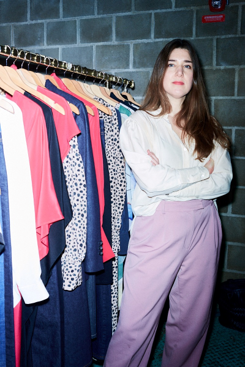
When I started Studio Heijne, I wanted to create beautiful clothes that were made for the woman who would actually wear them. Not for an abstract "standard customer", and not for a warehouse. Over the years, I have fitted and dressed many women with different proportions. Again and again, I saw the same thing: two women could choose the same size, yet need completely different garments. One might have a narrow waist and fuller hips. Another might have a straighter shape. Their hip measurement could be identical, but the same pair of trousers would never fit both equally well. This is normal. Human bodies are diverse. The system used to produce most clothing is not.
Most ready-to-wear garments begin with one base pattern. This pattern represents a specific combination of measurements and proportions. It is then graded up and down to create a size range. Grading is necessary for mass production, but it does not create a new shape for every customer. It mainly makes the original pattern larger or smaller according to predetermined rules. This means that a size chart quietly assumes that certain measurements always belong together: a particular waist with a particular hip, bust or thigh. But real bodies do not follow one fixed formula. When a woman's proportions differ from the base pattern, the garment may fit in one area and fail in another. Trousers may fit over the hips, but leave a gap at the waist. A jacket may fit across the bust but be too wide at the shoulders. Going up or down a size simply moves the problem. For years, customers have been encouraged to believe that their bodies are difficult. My experience has taught me the opposite:
The body is not the problem. The garment was simply not created for that body.
The fashion industry has tried to improve fit in many ways: larger size ranges, petite and tall collections, size recommendation tools, virtual fitting rooms and increasingly detailed size charts. These developments can help customers choose between existing sizes. But they usually do not change the pattern itself.
A recommendation tool might identify that size 40 is more likely to fit you, than size 38. That is useful, but if neither pattern reflects the customer's proportions, the technology is selecting the least-wrong option rather than creating the right one. I learned that this distinction is important. Better size prediction is not the same as better fit.
At Studio Heijne, we worked with made-to-order and made-to-measure garments for ten years. Instead of asking every customer to adapt to a finished product, we could adapt the garment before producing it. The difference was remarkable. Our made-to-measure return rate was below 2%, while returns for our standard-size garments were around 30%. We also avoided producing large quantities in advance, which meant less unsold stock, fewer markdowns and less wasted material. But there was a challenge. The process relied heavily on specialist knowledge and manual work. Measurements had to be interpreted. Patterns had to be adjusted. Production information had to be prepared individually. It worked, but it was difficult to scale. That became the starting point for ShapelyTech.
Today, fashion brands have access to more customer data than ever. But the essential information about an individual body rarely reaches the pattern that determines the fit. That is the connection we are building at ShapelyTech. Our goal is to help brands move from standard sizes and speculative mass production towards garments made on demand in more personal fits. At ShapelyTech, we are developing technology that translates customer measurements and garment rules into production-ready pattern adaptations. In simple terms, we want the pattern to respond to the person — before the fabric is cut. For brands, this can mean fewer returns, less inventory risk and the ability to serve more body shapes without stocking every possible variation. For customers, it means clothing that feels as though their body was considered from the beginning. For the environment, it means fewer unwanted garments being produced, shipped, returned, discounted or discarded.
Poor fit is often treated as an e-commerce conversion problem or a returns problem. But it is bigger than that. It is also a product-development problem, a profitability problem and a sustainability problem. If a garment is produced before anyone knows whether it is wanted — or whether it will fit — the financial and environmental risk already exists. Better photography, smarter recommendations and easier returns can improve the shopping journey, but they cannot remove that underlying risk. To make a meaningful change, we must connect demand, body data, pattern creation and production.
I do not believe the future of fashion is about offering endless additional sizes or asking customers to become better at navigating inconsistent size charts. I believe it is about making the system more responsive. The knowledge already exists in tailoring, pattern cutting and made-to-measure. The opportunity now is to combine that expertise with automation, making personal fit and on-demand production commercially viable at a much larger scale. This is what I learned through Studio Heijne and it is why I founded ShapelyTech.
We should not expect millions of different bodies to fit one fixed system. We should build a system flexible enough to fit them.
Wendy Heijne is a fashion designer, founder of Studio Heijne and CEO of ShapelyTech. ShapelyTech develops technology that helps fashion brands offer personalized garments made on demand, reducing returns, overproduction and inventory risk.